Doc Green Thumb
Houseplants
Houseplants are far more than decoration. They purify air, regulate humidity, reduce stress, and connect us to the natural world. Each card below shows the plant's care needs and its specific threats — tap any threat pill to see how to prevent and treat it. Swipe or use the arrows on each card to browse multiple photos.
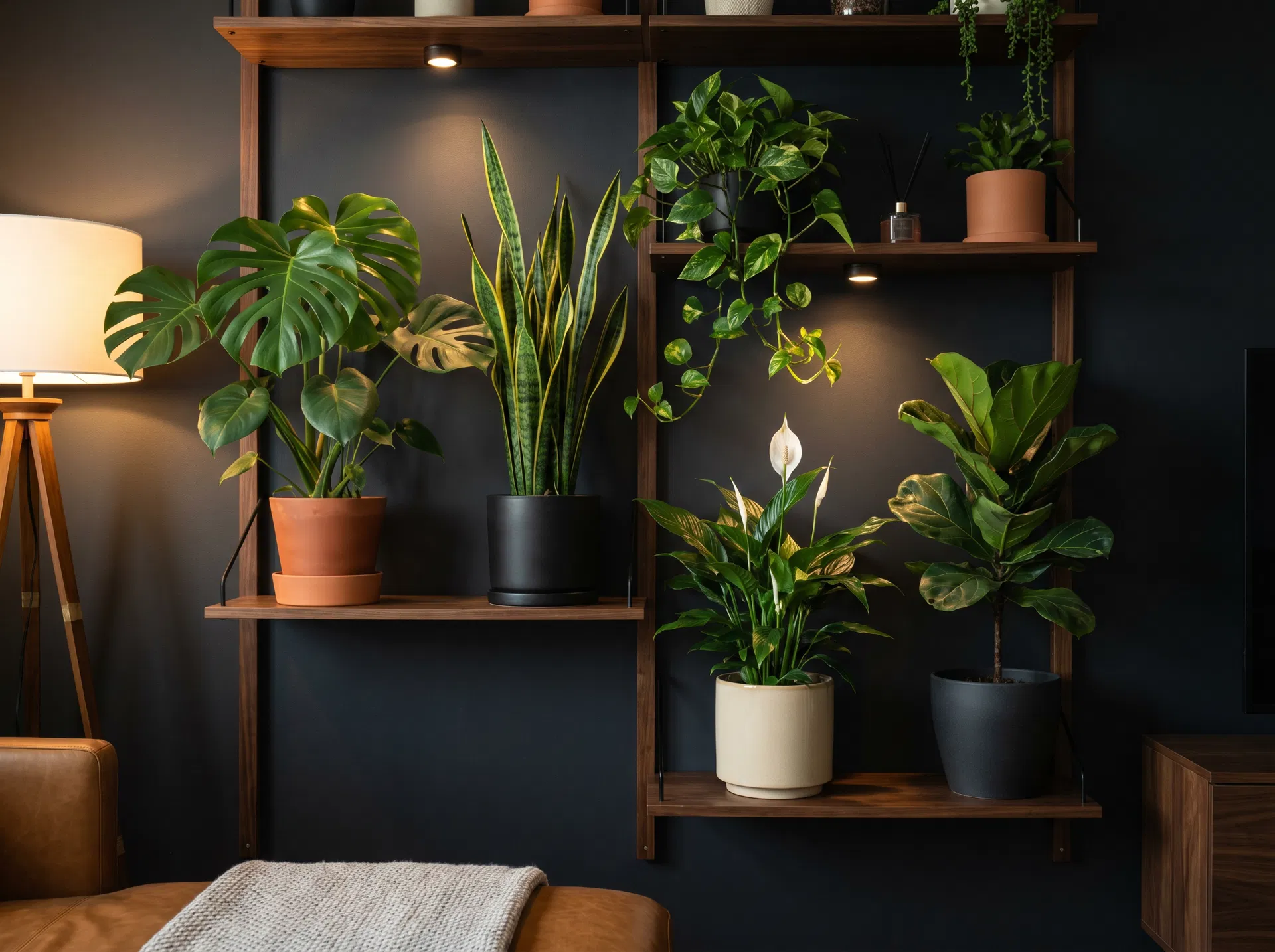
Phototropism & Plant Rotation
Plants grow toward light — a phenomenon called phototropism. The hormone auxin accumulates on the shaded side of a stem, causing those cells to elongate faster, bending the plant toward the light source.
Without regular rotation, houseplants develop a severe lean, sparse foliage on the shaded side, and uneven root development. A simple quarter-turn every 7–14 days ensures balanced, symmetrical growth.
Monstera
Weekly
Fiddle Leaf Fig
Weekly
Pothos
Weekly
Calathea
Monthly
Dragon Tree
Quarterly
Snake Plant
Quarterly
Light Level
Care Difficulty
Pet Safety


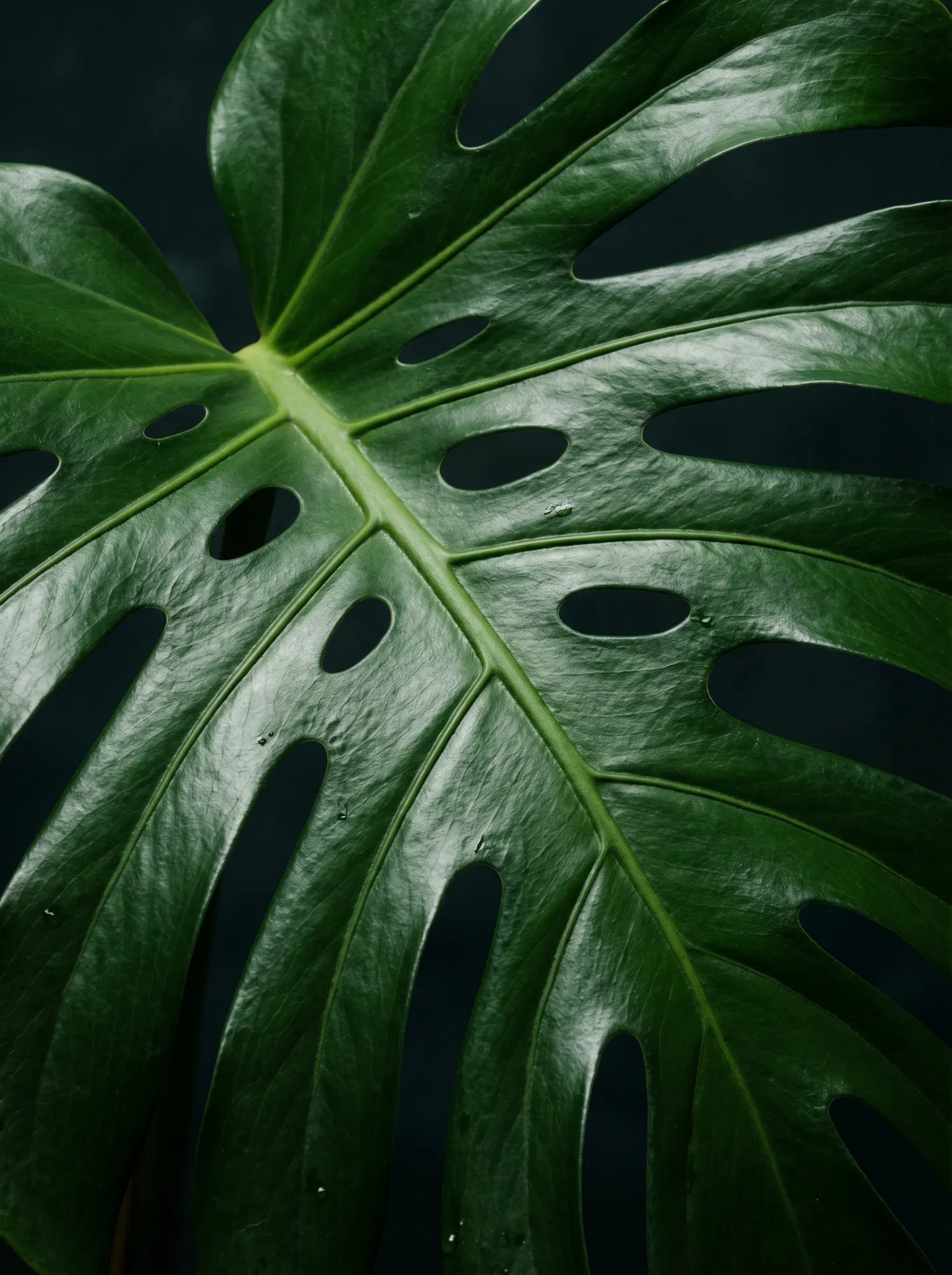
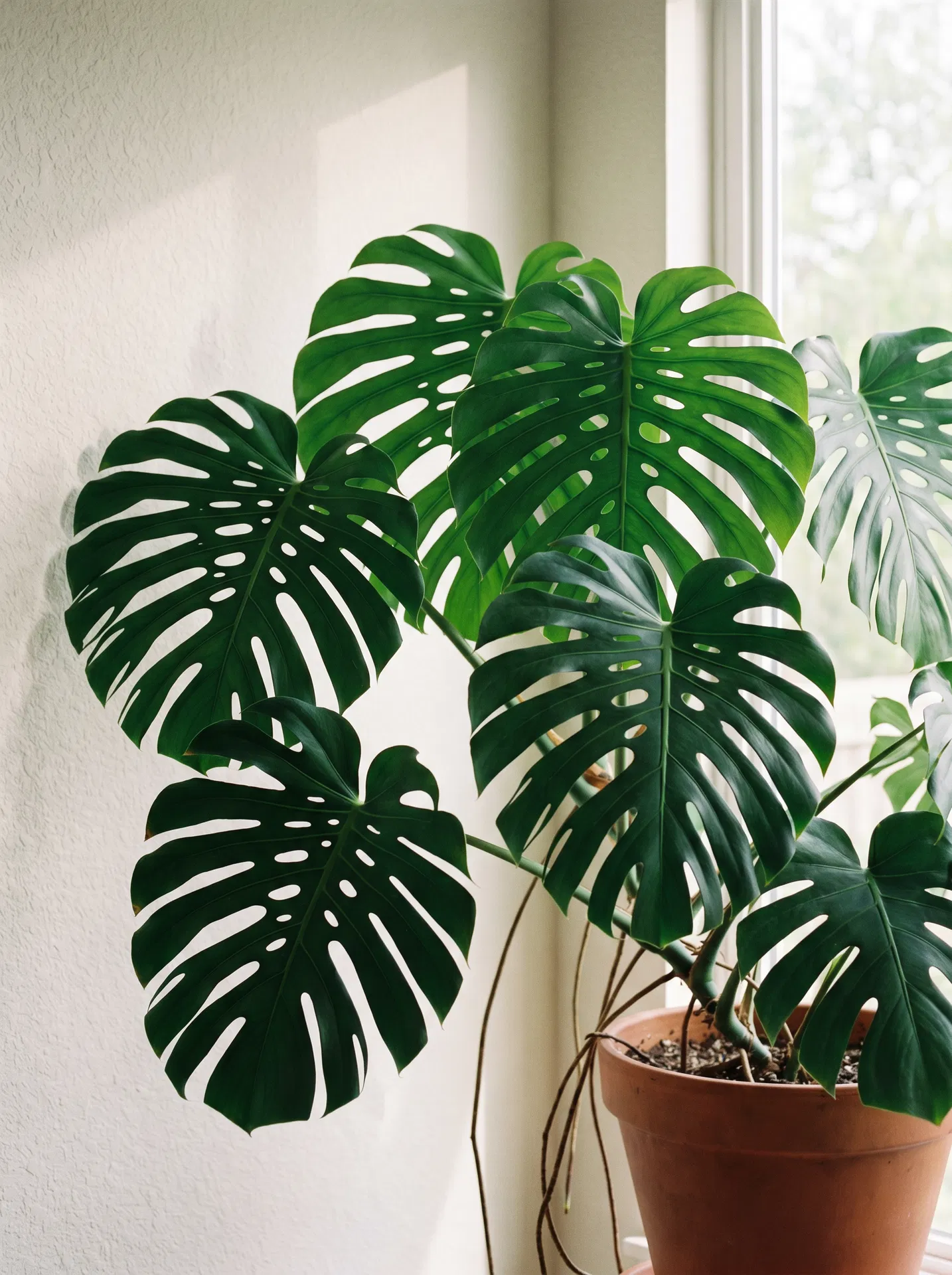
Swiss Cheese Plant
Monstera Deliciosa
Native to Central American rainforests, the Monstera is prized for its dramatic fenestrated leaves. It thrives in bright, indirect light and benefits from weekly rotation to maintain even, symmetrical growth — a classic phototropic responder. Use a chunky, well-draining mix of potting soil, perlite, and orchid bark to prevent root rot.
Soil Mix
40% potting mix, 30% perlite, 30% orchid bark · pH 5.5–7.0
Common Threats — tap to see precautions & treatment

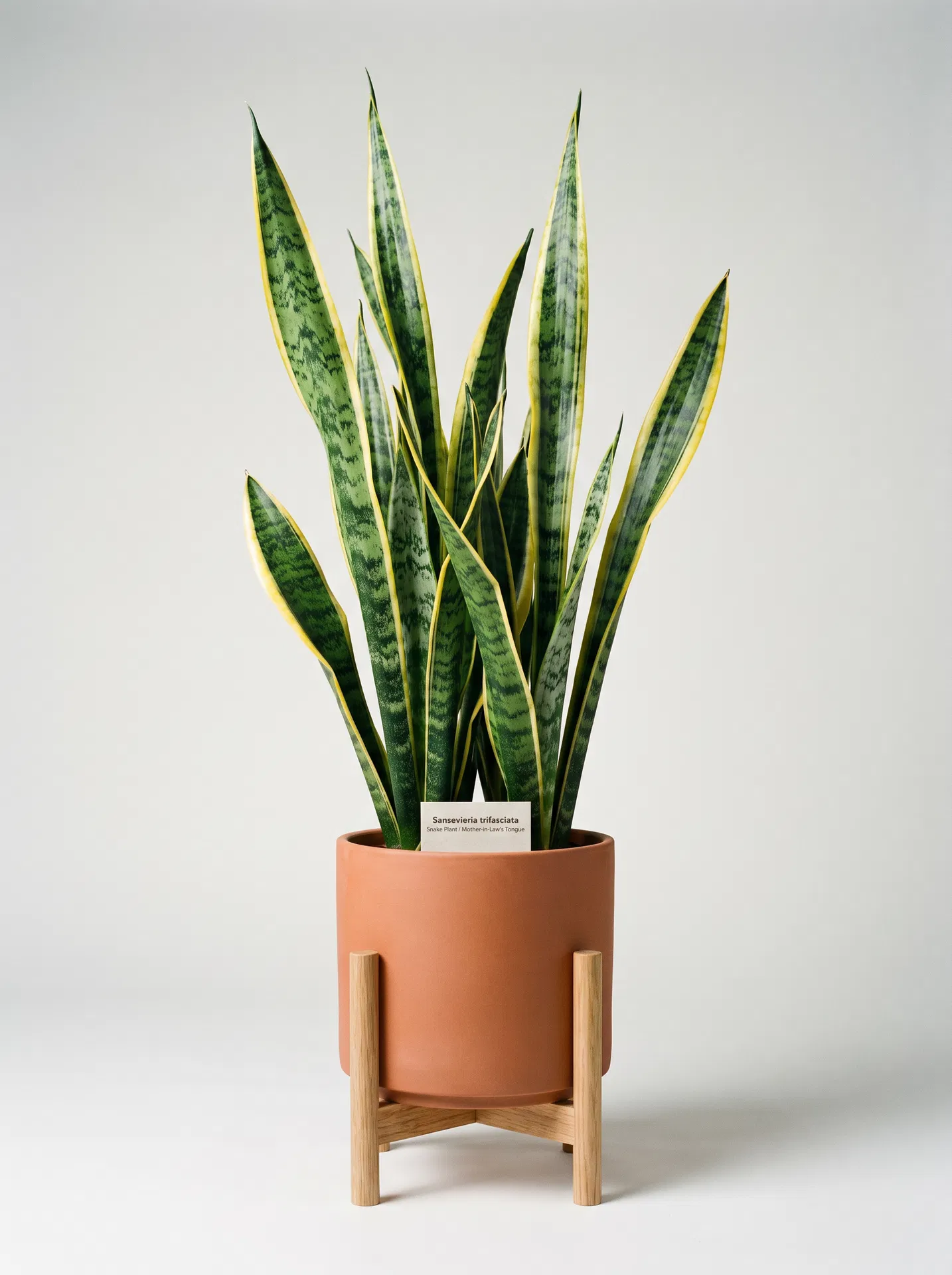
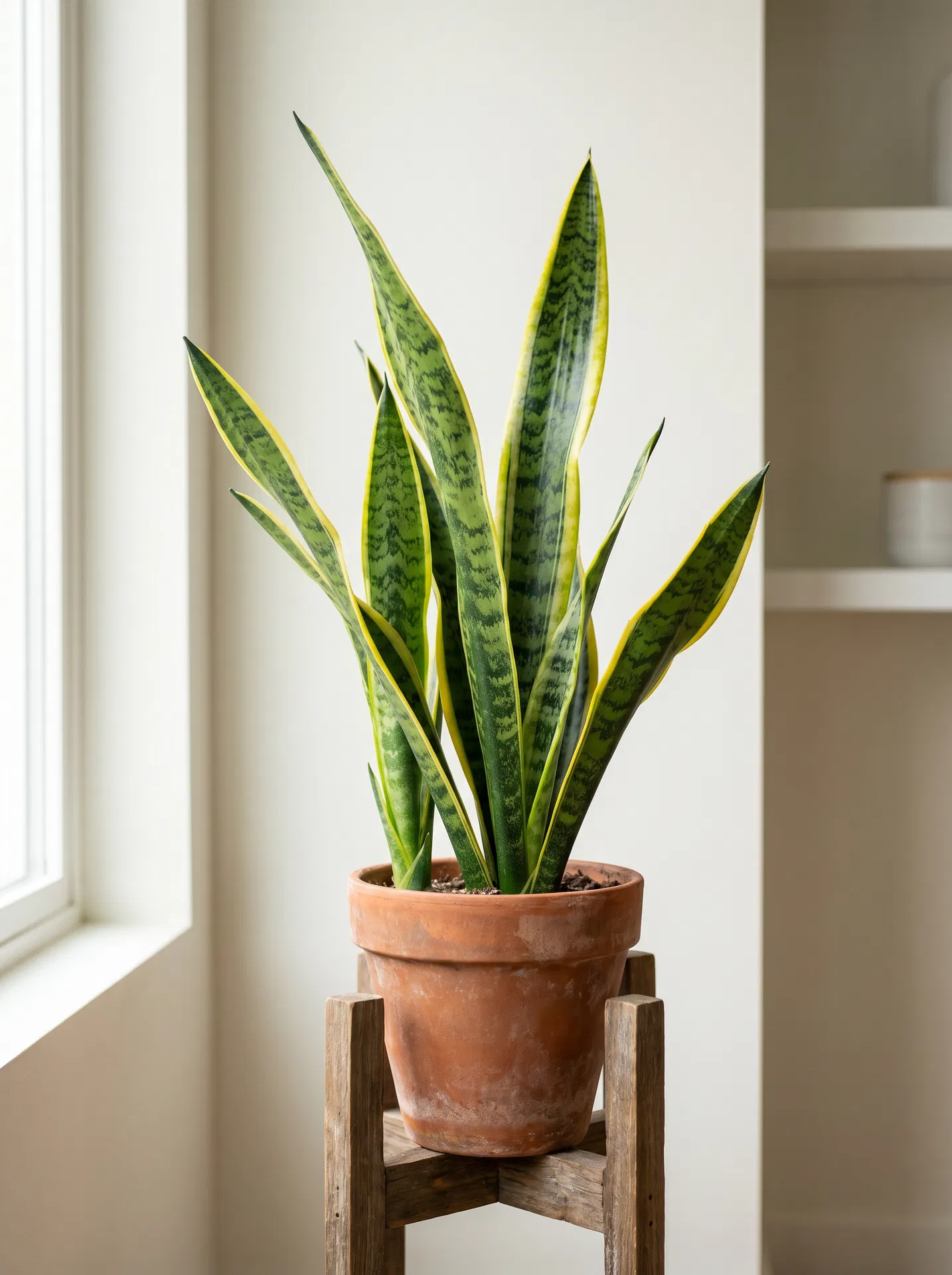
Snake Plant
Sansevieria trifasciata
One of the hardiest houseplants, the snake plant tolerates neglect and low light. It converts CO₂ to oxygen at night, making it ideal for bedrooms. Plant in a well-draining cactus mix or a blend of potting soil with perlite — soggy soil is the primary killer. Benefits from a quarterly rotation.
Soil Mix
Cactus mix or 2:1 potting soil + perlite/sand · pH 5.5–7.5
Common Threats — tap to see precautions & treatment

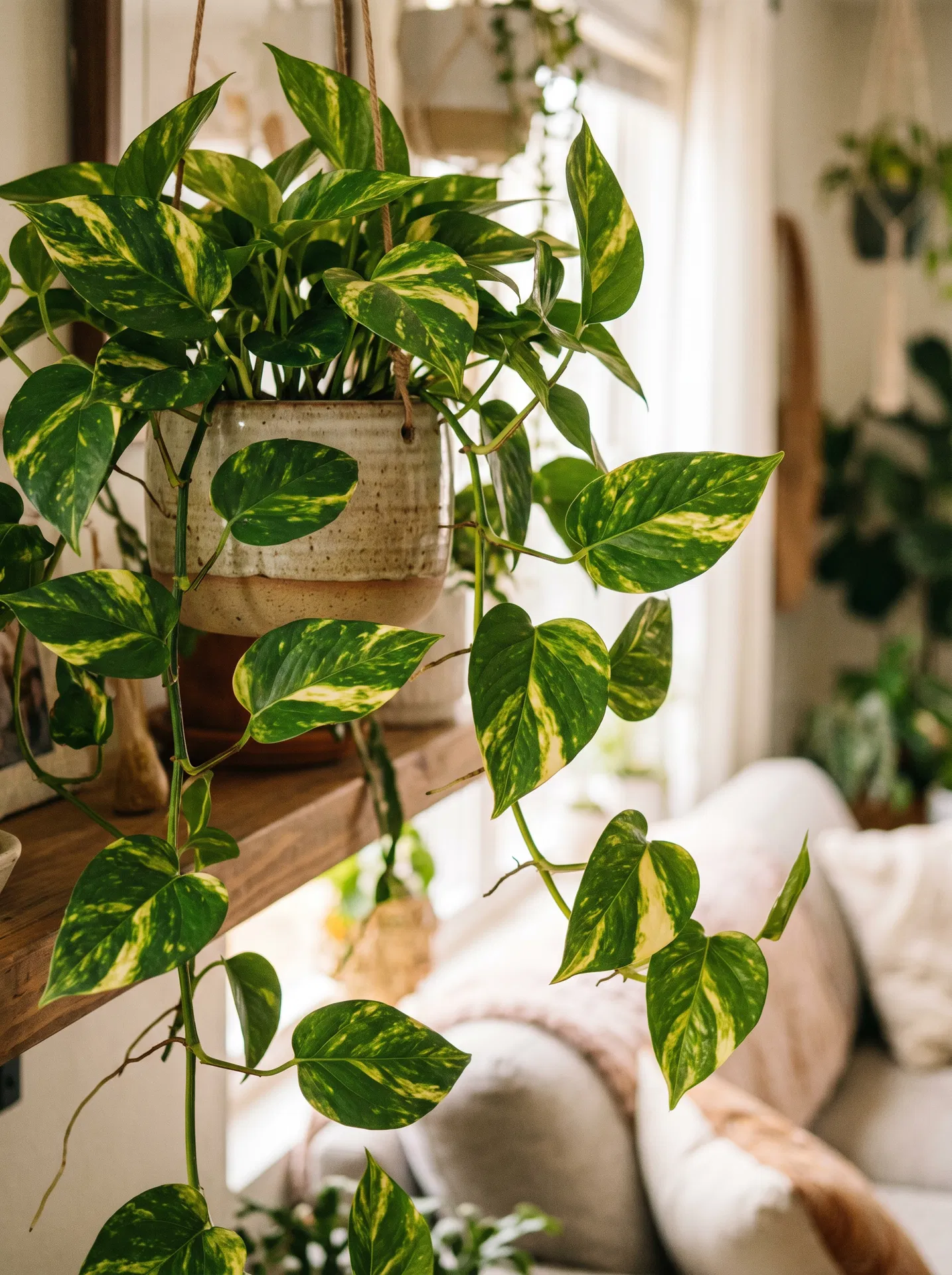
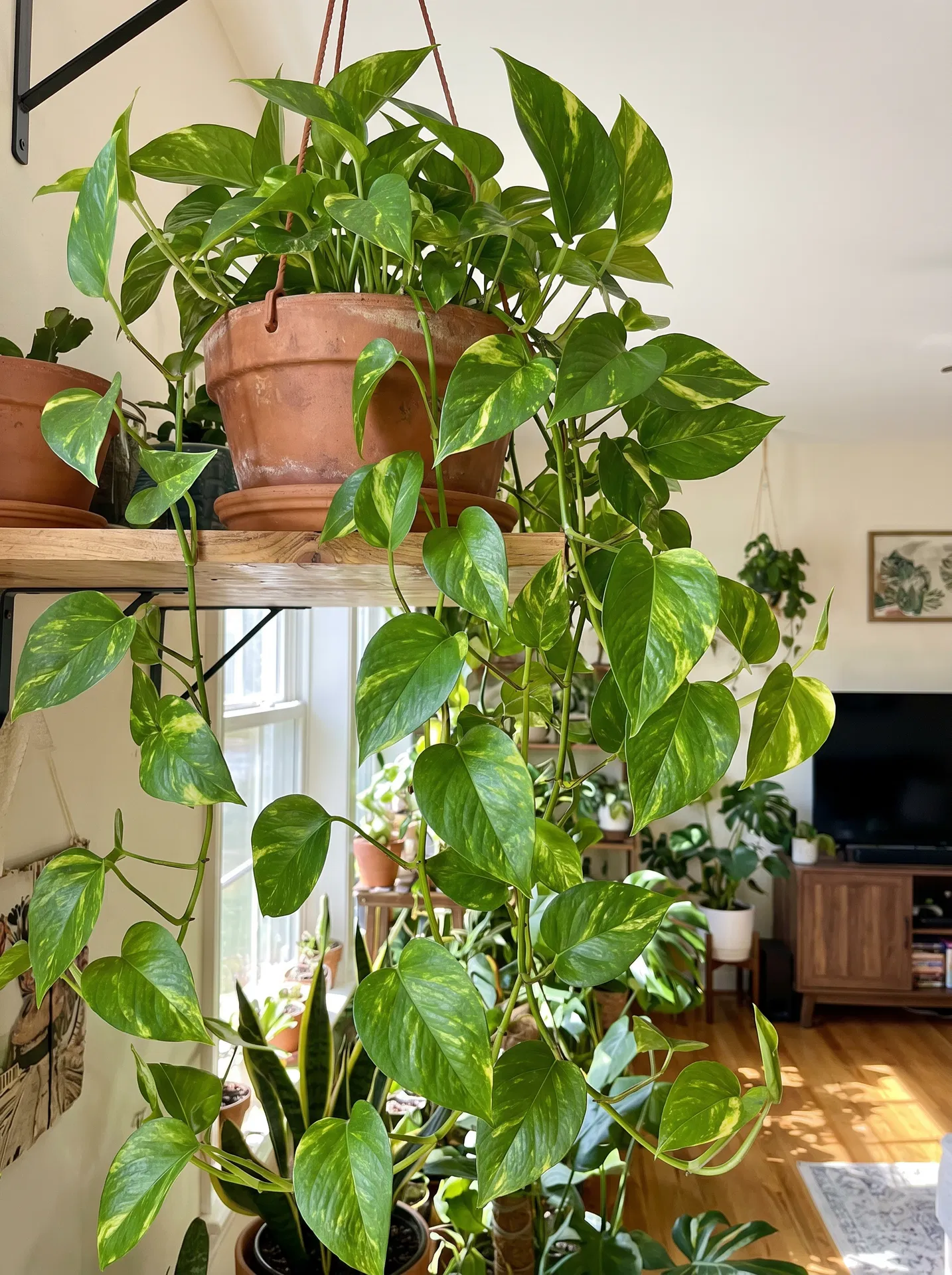
Pothos
Epipremnum aureum
Pothos is a vining plant that grows vigorously toward any light source. Without rotation, one side becomes bare and leggy while the other grows lush. Use a well-draining mix of potting soil, perlite, and peat moss — compacted or soggy soil invites root rot and fungus gnats. Rotate a quarter turn weekly when watering.
Soil Mix
40% potting soil, 30% perlite, 30% peat/coco coir · pH 6.0–6.8
Common Threats — tap to see precautions & treatment

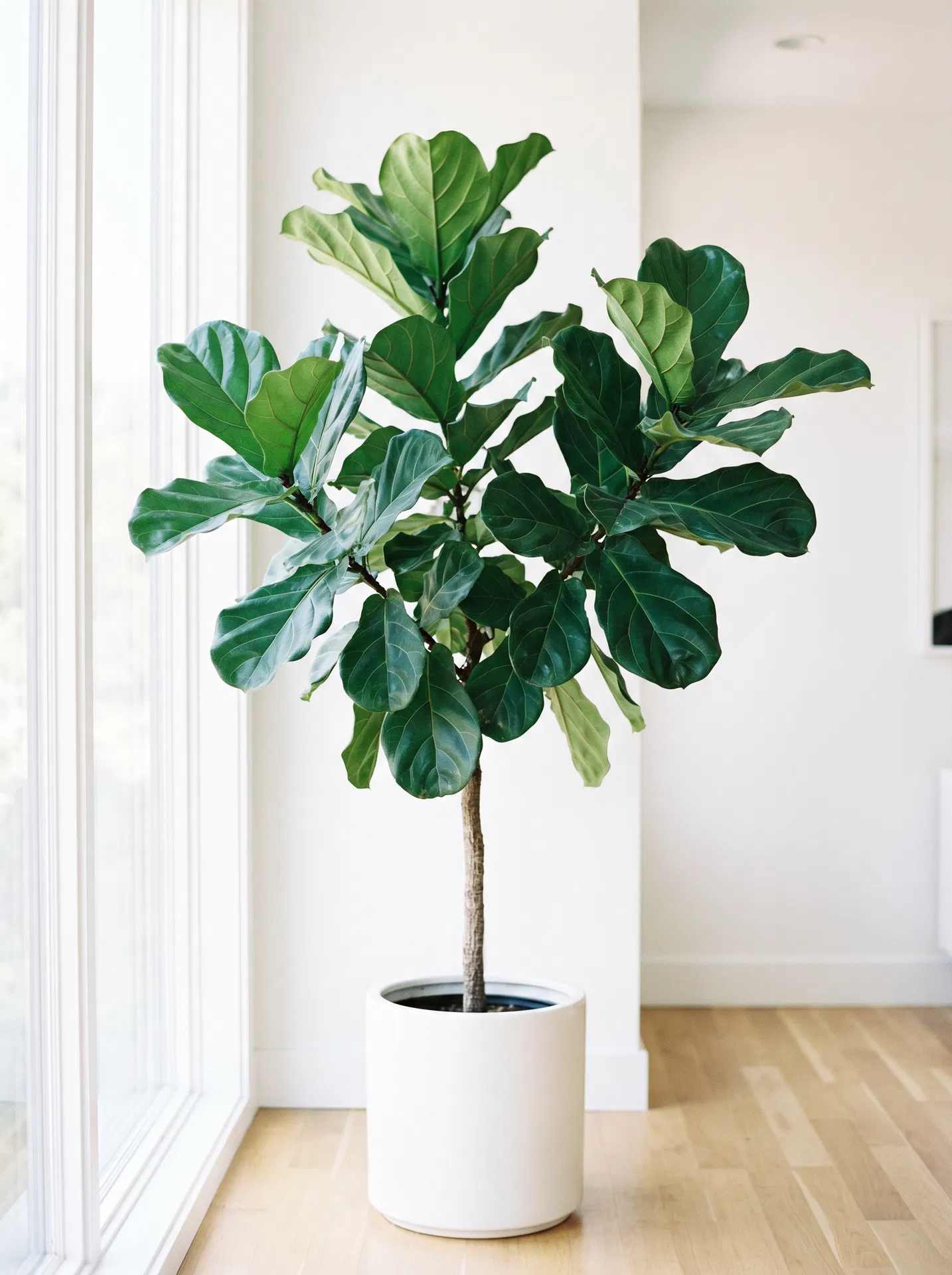
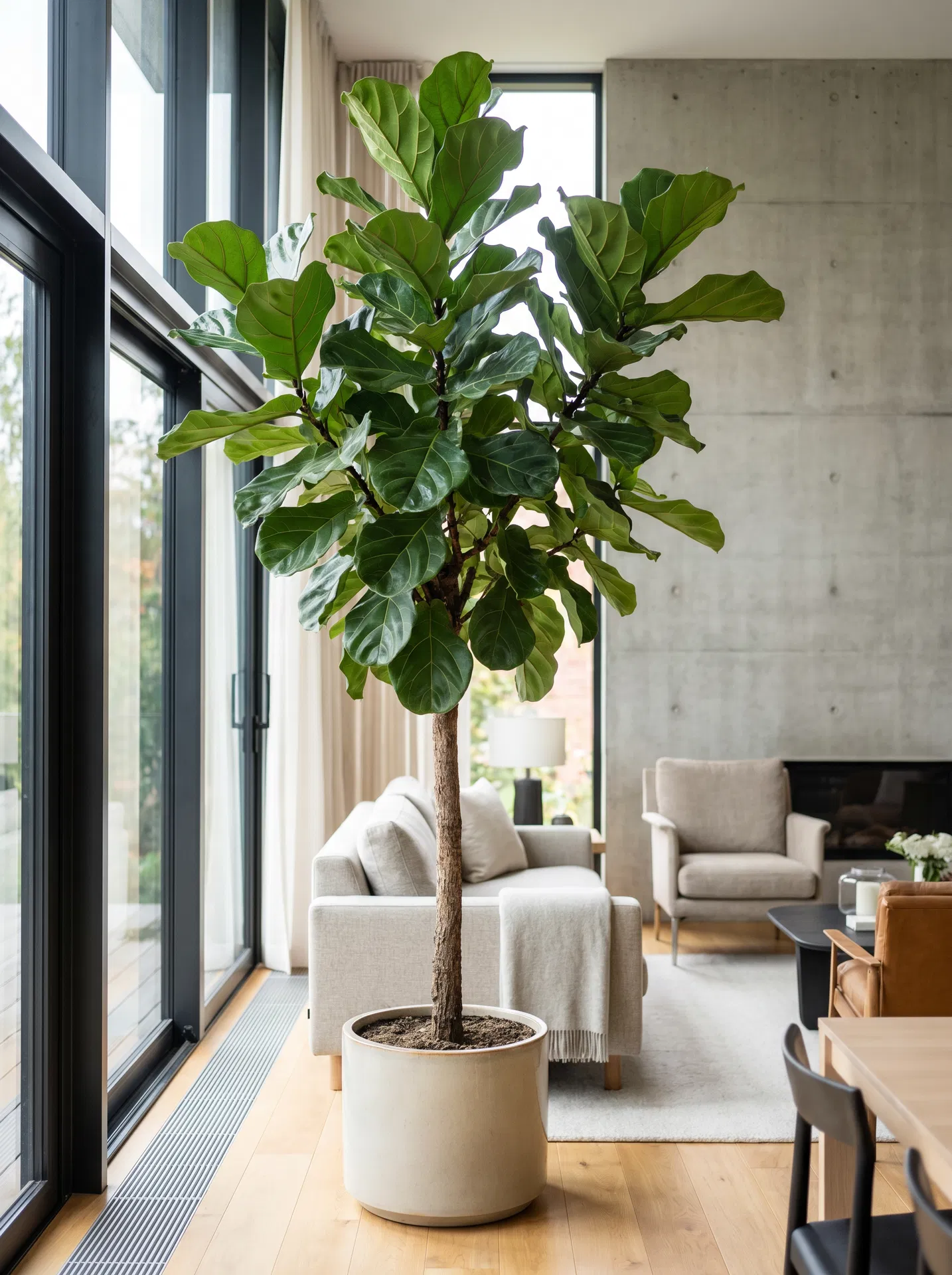
Fiddle Leaf Fig
Ficus lyrata
The fiddle leaf fig is notoriously sensitive to change but rewards consistent care with stunning large leaves. It needs a rich yet well-draining mix — potting soil blended with compost, bark, coconut fiber, and pumice at pH 6.0–7.0. It is highly phototropic; without weekly rotation it will develop a severe lean. Avoid cold drafts and sudden temperature shifts.
Soil Mix
Potting soil + compost + bark + coconut fiber + pumice · pH 6.0–7.0
Common Threats — tap to see precautions & treatment

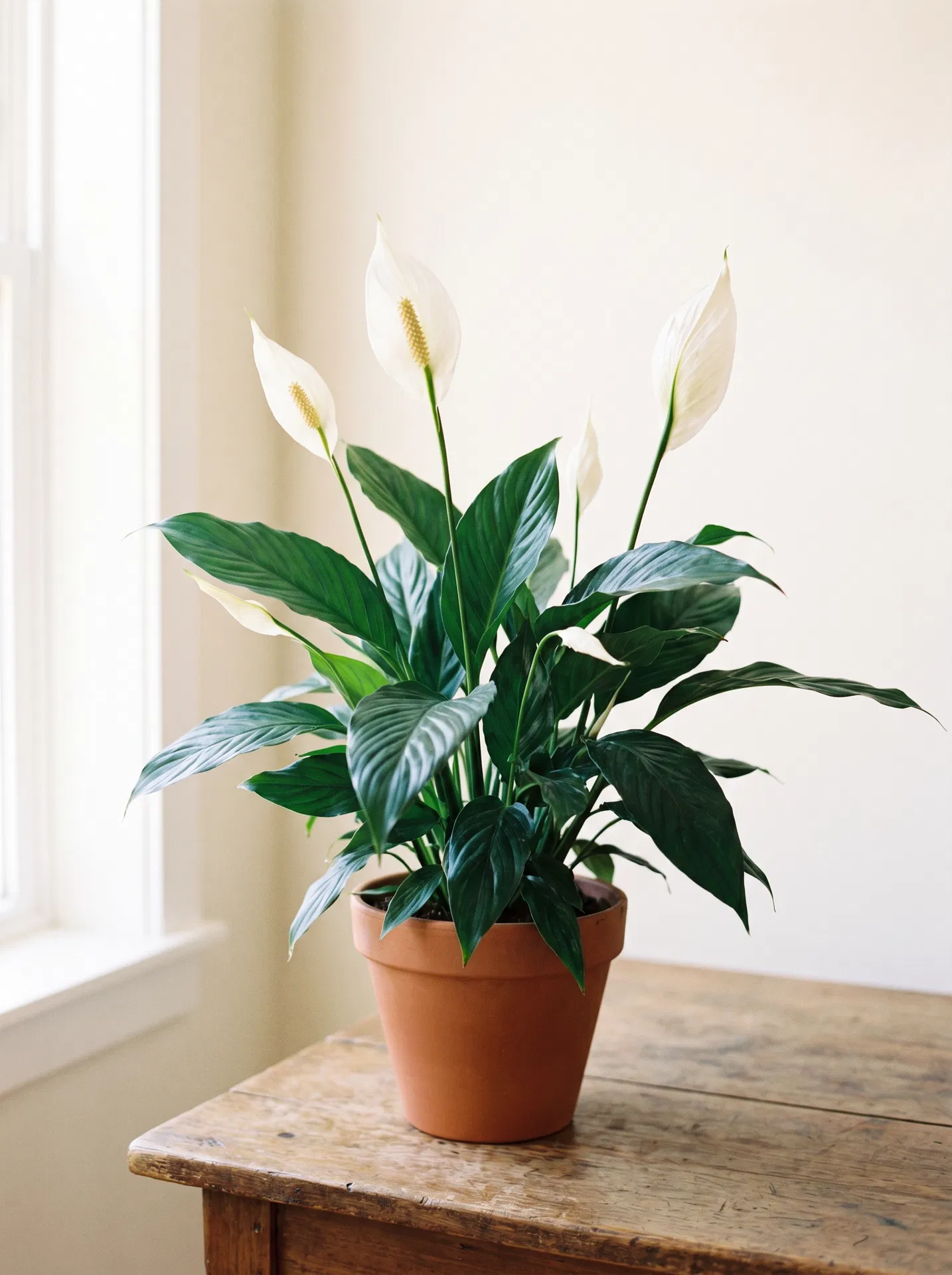
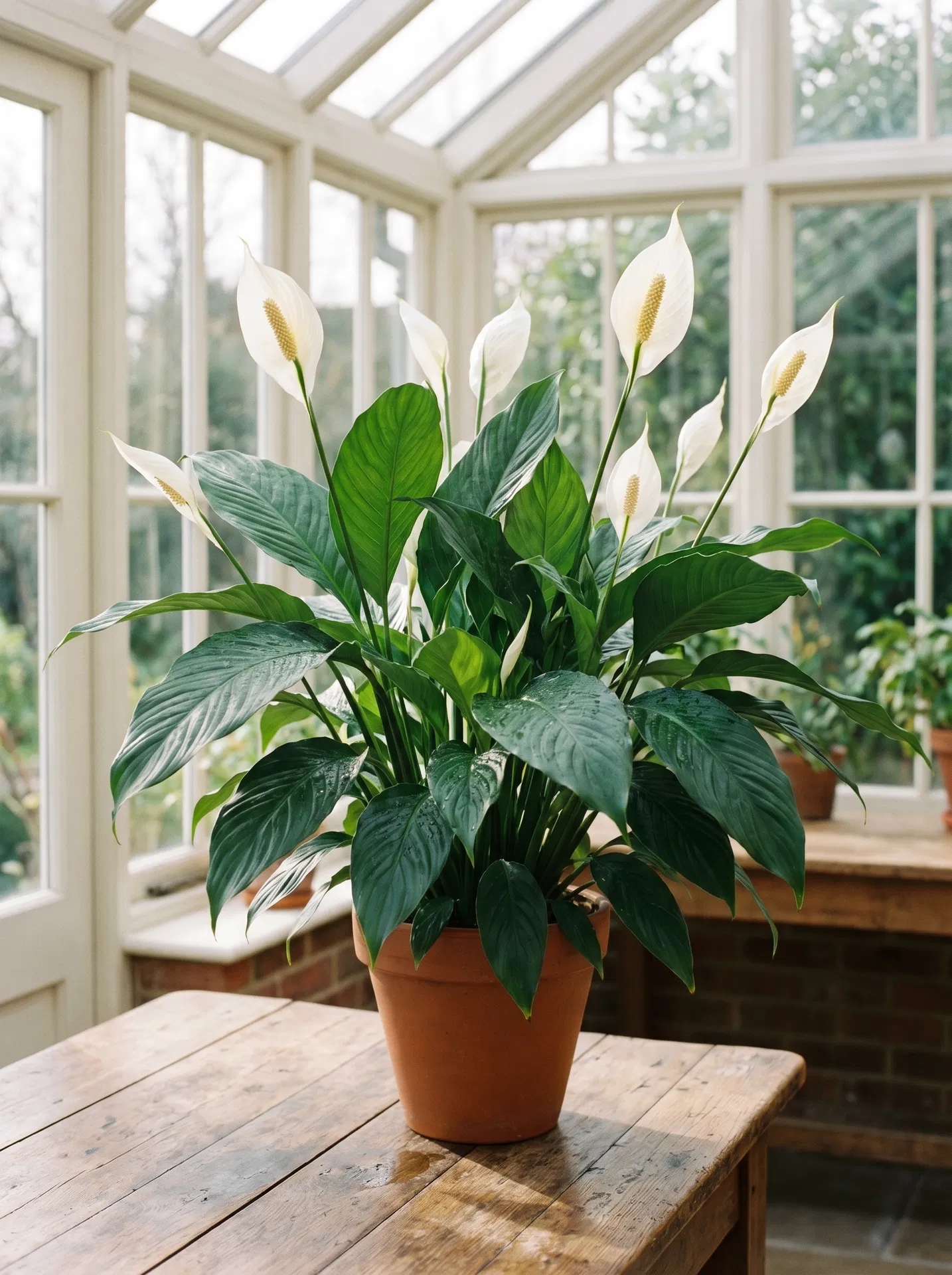
Peace Lily
Spathiphyllum
Peace lilies are excellent air purifiers, removing benzene, formaldehyde, and ammonia. They thrive in a moisture-retaining yet well-draining mix of coco coir, perlite, orchid bark, and worm castings at pH 5.5–6.5. They signal thirst by drooping dramatically before recovering quickly after watering. Rotate monthly to prevent lopsided foliage.
Soil Mix
50% coco coir, 25% perlite, 15% orchid bark, 5% charcoal, 5% worm castings · pH 5.5–6.5
Common Threats — tap to see precautions & treatment


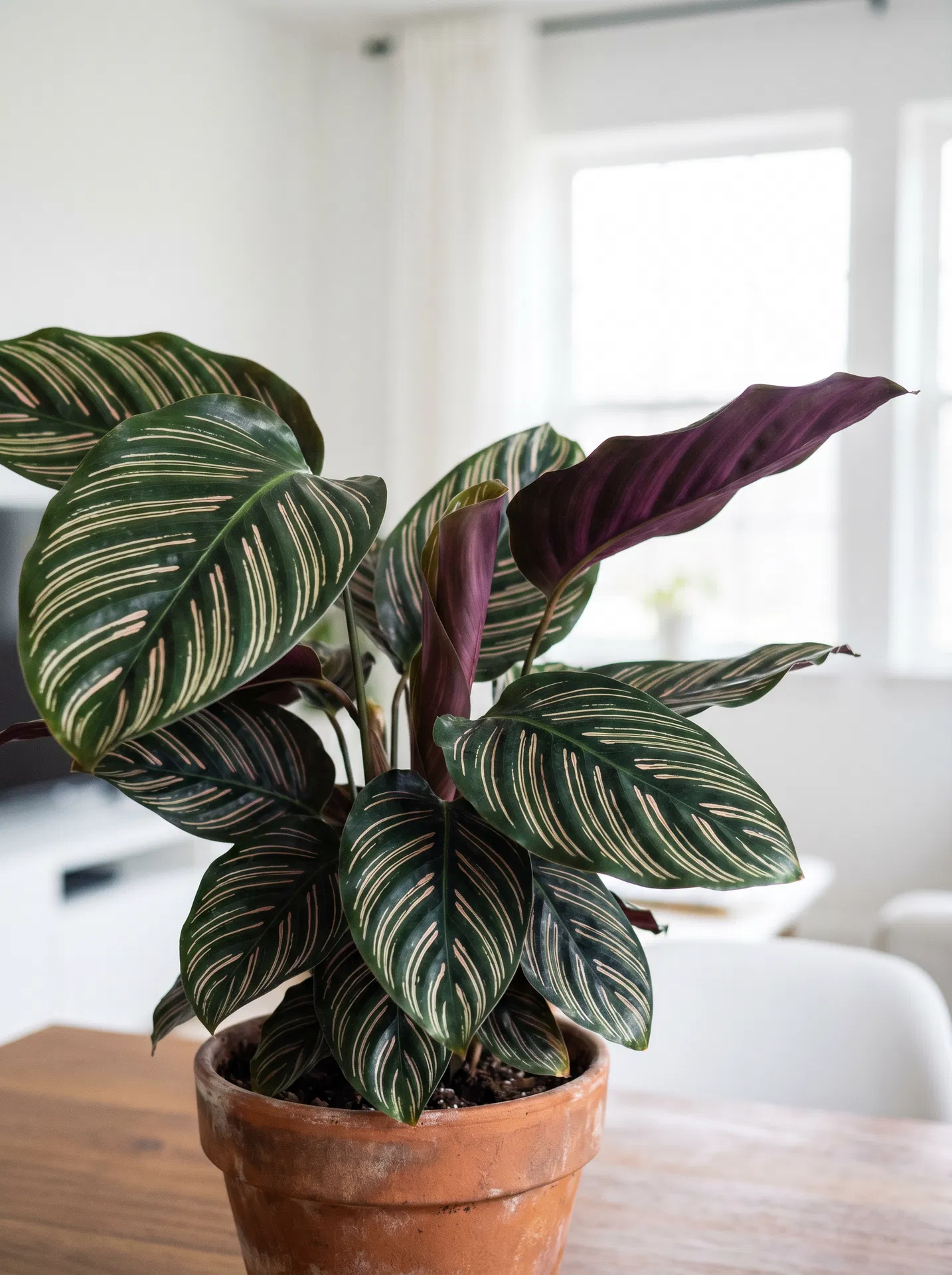
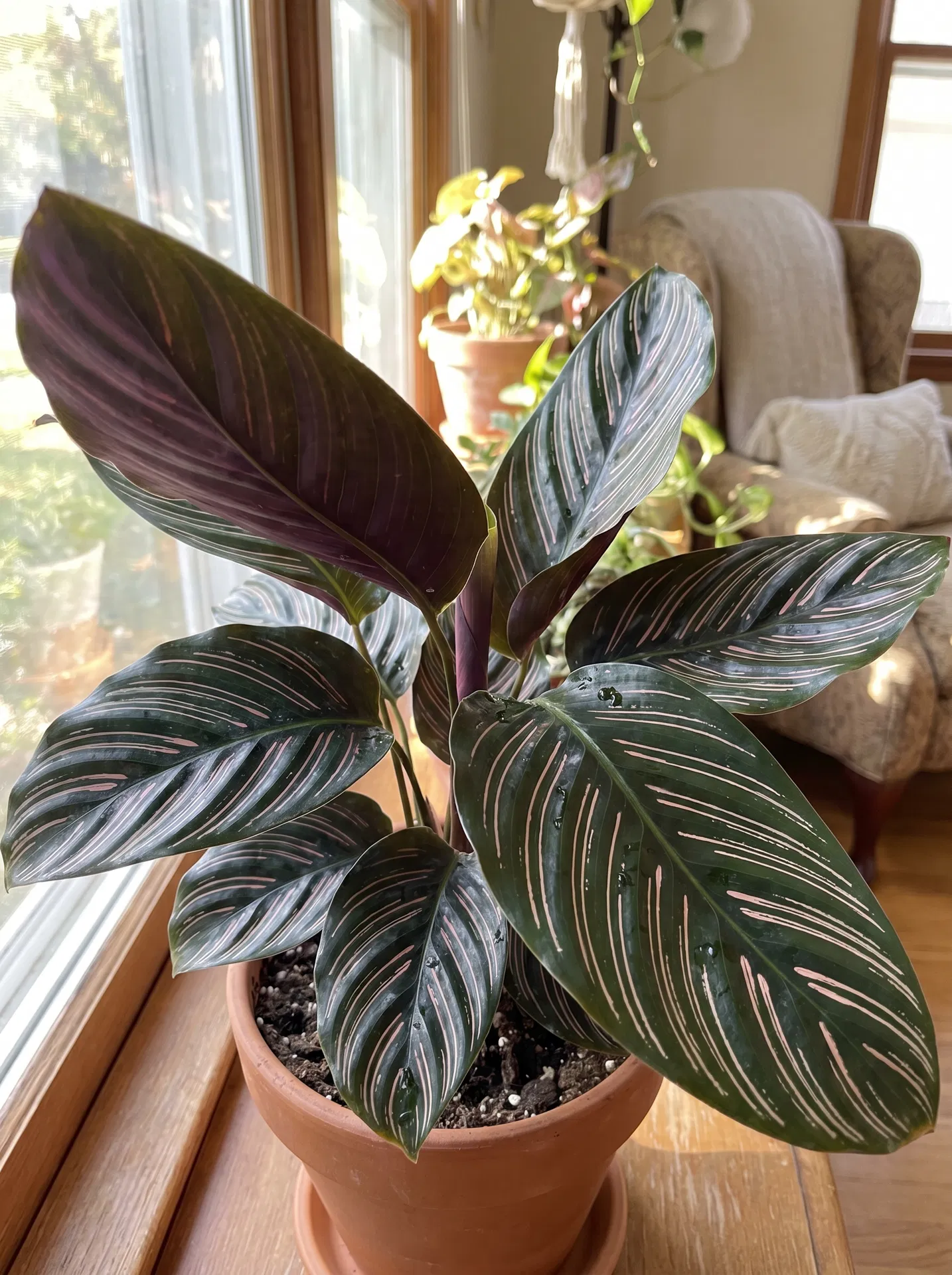
Pinstripe Plant
Calathea ornata
Calatheas are known for their striking patterned leaves that fold up at night (nyctinasty). They need a well-draining mix of peat moss, orchid bark, perlite, and organic compost at pH 6.0–6.5 — heavy clay soils cause root rot instantly. They are also highly sensitive to tap water fluoride; use filtered or distilled water. Low humidity causes crispy brown edges almost immediately.
Soil Mix
2 parts peat, 2 parts orchid bark, 2 parts perlite, 1 part compost · pH 6.0–6.5
Common Threats — tap to see precautions & treatment
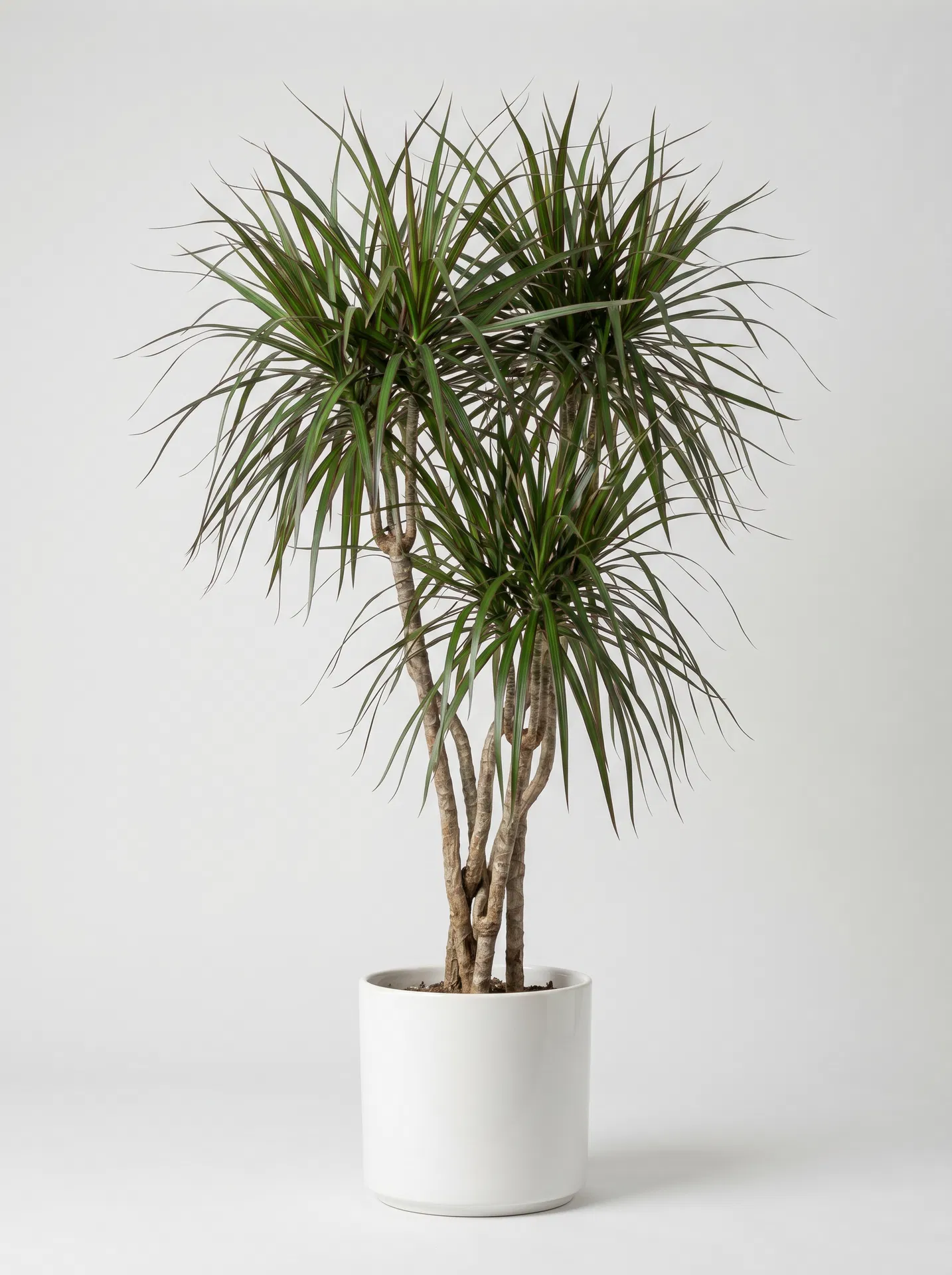
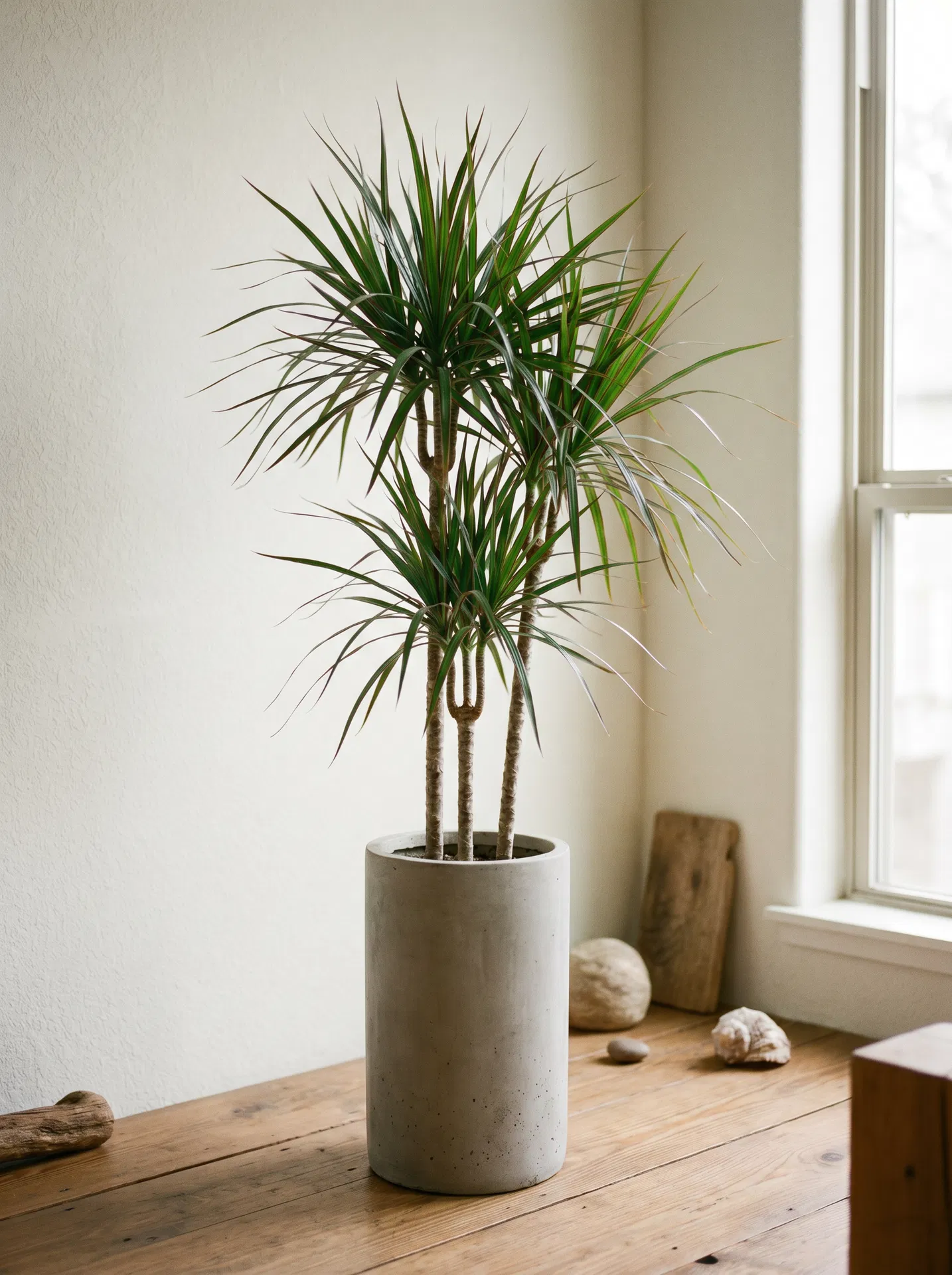
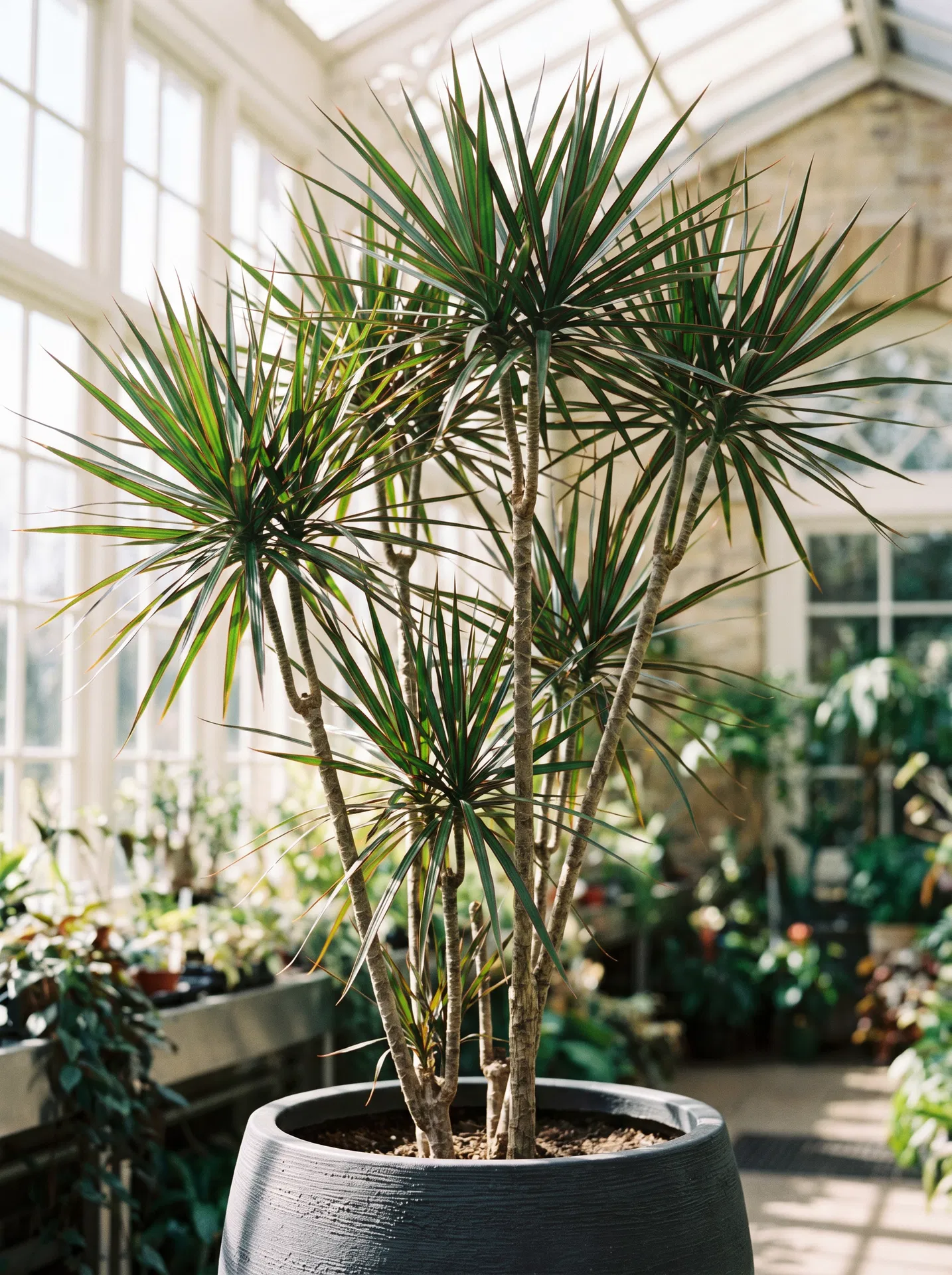
Dragon Tree
Dracaena marginata
With its slender, arching leaves edged in red-purple, the dragon tree adds architectural drama to any room. It thrives in a light, airy mix of coco coir, perlite, and bark at pH 6.0–6.5 — compact or waterlogged soil leads to root rot and fungus gnat infestations. It is one of the top-ranked plants for removing trichloroethylene (TCE) from indoor air. Sensitive to fluoride — use filtered water.
Soil Mix
60% peat/coco coir, 20% perlite, 20% bark · pH 6.0–6.5
Common Threats — tap to see precautions & treatment
Threats & Pests
Indoor plants face threats from microscopic insects, environmental stress, and poor conditions. Knowing how to identify, treat, and prevent these threats is essential for keeping your houseplants alive and thriving.

Common Indoor Pests

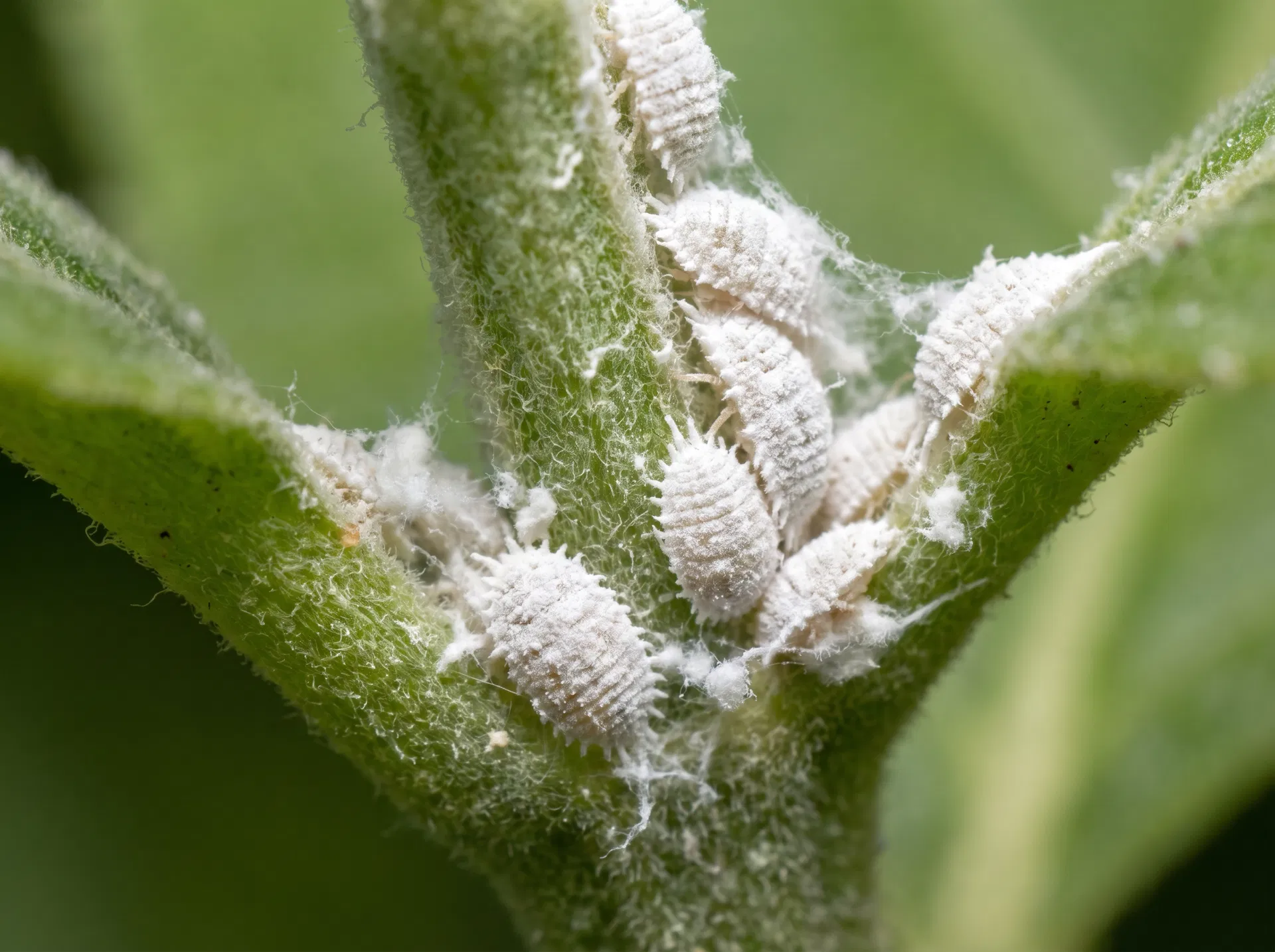
Mealybugs
Identification
White, cottony clusters on stems, leaf axils, and undersides. Sticky honeydew residue and sooty mold are secondary signs.
Damage
Suck plant sap causing stunted growth, yellowing leaves, and general decline. Females lay hundreds of eggs in hidden nests under pots.
Treatment Protocol
- 01.Dab visible adults with a cotton swab soaked in 70% isopropyl alcohol
- 02.Use masking tape to lift larvae from leaf surfaces
- 03.Spray neem oil solution (diluted with water + mild dish soap) weekly
- 04.Wash pot exteriors with soapy water to destroy hidden egg nests
- 05.Repeat treatments for 6–8 weeks to break the full life cycle
Mealybugs are NOT fungi — they are soft-bodied insects. Isolate infested plants immediately.

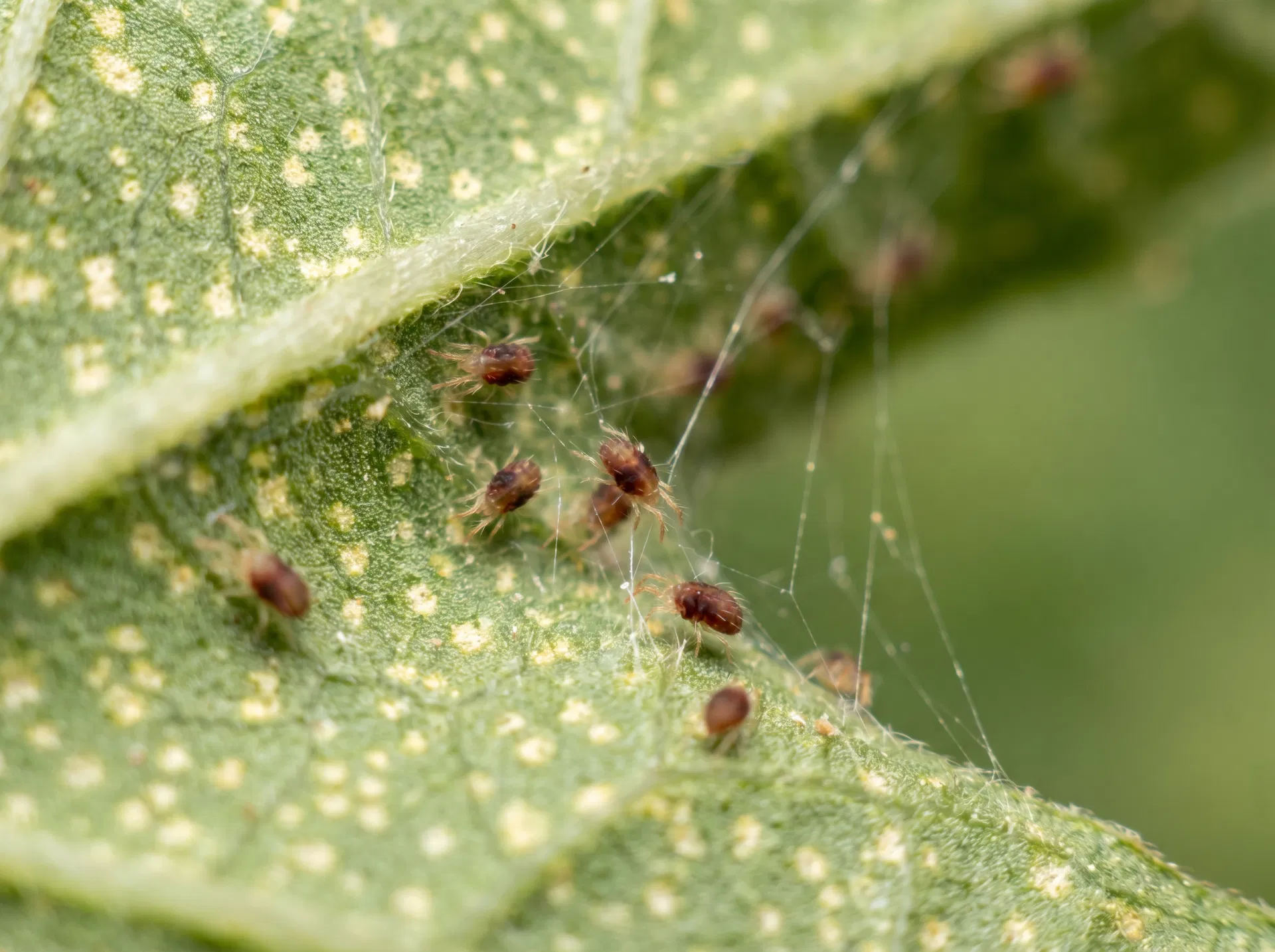
Spider Mites
Identification
Fine webbing on leaf undersides and between stems. Tiny stippling (white/yellow dots) on leaf surfaces. Thrive in hot, dry conditions.
Damage
Pierce individual plant cells with needle-like mouthparts to suck out sap. Disrupts photosynthesis, causes bronzing, yellowing, and premature leaf drop.
Treatment Protocol
- 01.Spray the undersides of leaves with a strong jet of water to dislodge webs and mites
- 02.Apply neem oil spray (oil-based) thoroughly to all leaf surfaces, especially undersides
- 03.Use insecticidal soap every 7 days for 3–4 weeks
- 04.Increase humidity — spider mites hate moisture
- 05.Introduce predatory mites (Phytoseiulus persimilis) for severe infestations
Spider mites are arachnids, not insects. Standard insecticides may not work — use miticides or neem oil.
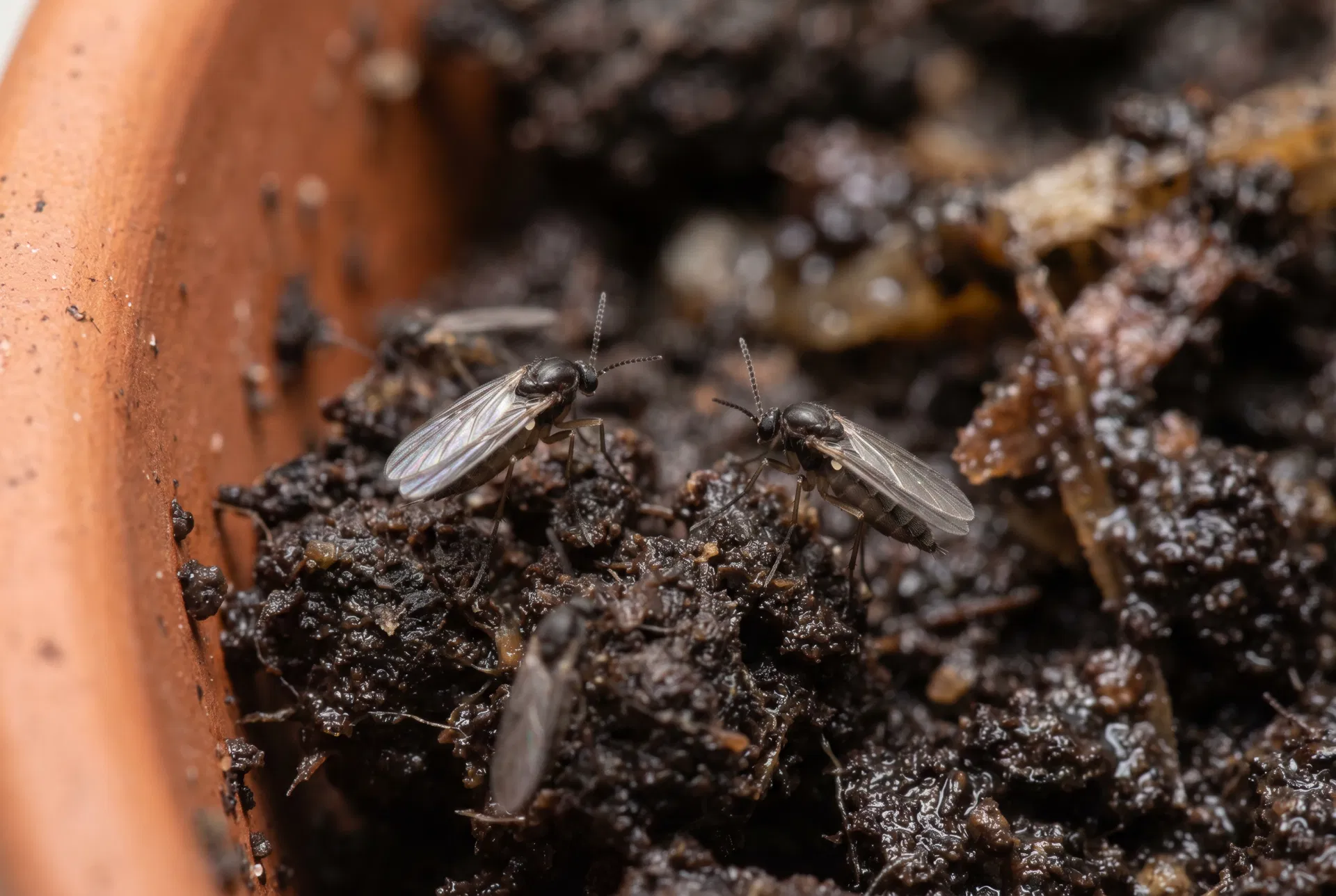
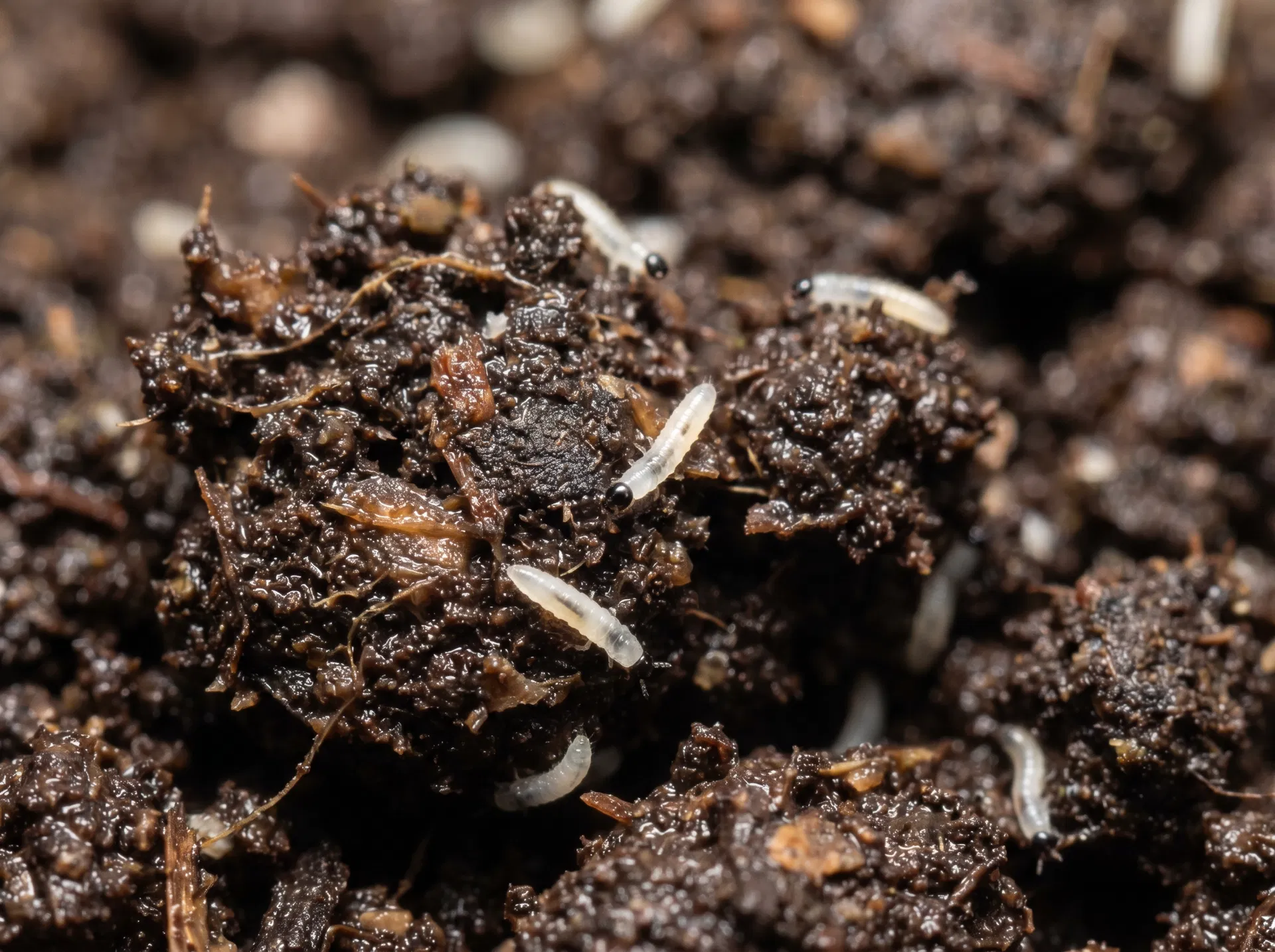
Fungus Gnats
Identification
Small dark flies (1/8 inch) hovering around soil and light sources. Larvae are pale worms with black heads in moist soil.
Damage
Adults are cosmetic nuisances. Larvae feed on root hairs and tunnel into roots, causing stunted growth and yellowing in heavy infestations.
Treatment Protocol
- 01.Allow the top 1–2 inches of soil to dry completely between waterings
- 02.Apply hydrogen peroxide drench: 1 part 3% H₂O₂ to 4 parts water
- 03.Use yellow sticky traps to capture adults
- 04.Apply Bacillus thuringiensis israelensis (Bti) as a soil drench
- 05.Cover soil surface with coarse sand to deter egg-laying
Overwatering is the root cause. Fix your watering habits first, then treat.


Scale Insects
Identification
Small oval brown, tan, or white bumps firmly attached to stems and leaves. Sticky honeydew and sooty mold are telltale signs.
Damage
Attach permanently and feed on plant sap, causing yellowing, stunted growth, and potential plant death in severe cases.
Treatment Protocol
- 01.Target the vulnerable mobile 'crawler' stage — mature scales are protected by hard shells
- 02.Apply horticultural oil or neem oil to smother crawlers
- 03.Dab individual scales with rubbing alcohol on a cotton swab
- 04.Use insecticidal soap every 7–10 days
- 05.Release biological controls: Cryptobug beetles or parasitic wasps
Do NOT use chemical sprays and beneficial insects simultaneously — you will kill the beneficials.
Why Oil-Based Sprays Work
Neem Oil
Extracted from the neem tree, neem oil contains azadirachtin which disrupts the feeding and reproductive cycles of insects. Mix 1–2 tsp neem oil with 1 tsp mild dish soap per quart of water. Spray thoroughly on all leaf surfaces, especially undersides where pests hide and lay eggs.
Horticultural Oil
Refined petroleum or plant-based oils smother insects and their eggs by blocking their breathing pores (spiracles). Highly effective against scale crawlers, spider mites, and mealybugs. Apply when temperatures are between 40–90°F and avoid spraying in direct sunlight to prevent leaf burn.
Application Tips
Always spray the undersides of leaves where pests congregate and lay eggs. Treat in the evening to avoid sunscorch. Repeat every 7–14 days for at least 3 cycles to break the pest life cycle. Test on one leaf first if the plant is sensitive.
Indoor Environmental Threats

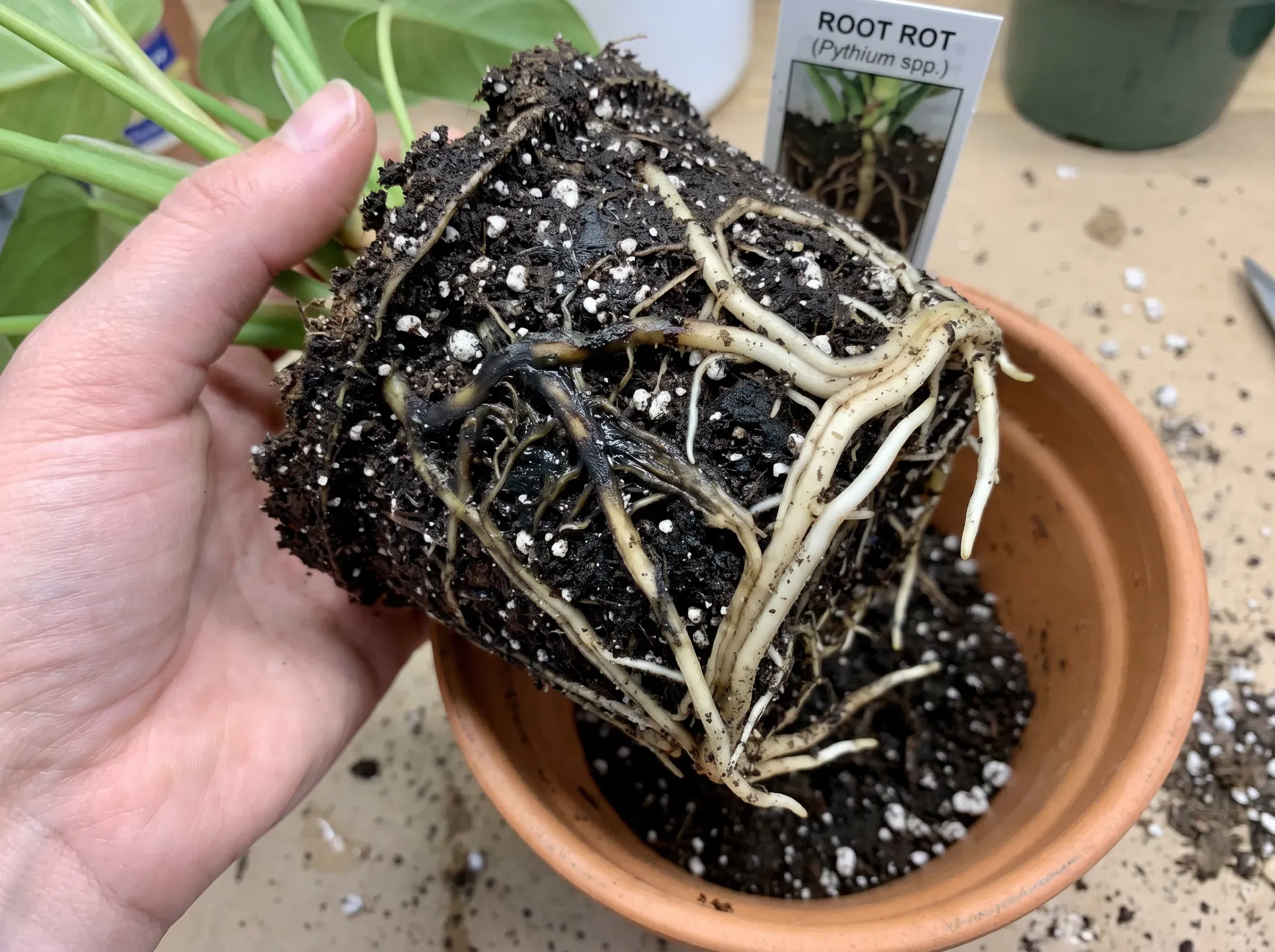
Overwatering & Root Rot
Excessive watering saturates soil, depriving roots of oxygen. Root rot fungi (Phytophthora, Pythium) thrive in waterlogged conditions, turning healthy white roots into black, slimy masses that cannot absorb water or nutrients. It is the number one killer of indoor plants.

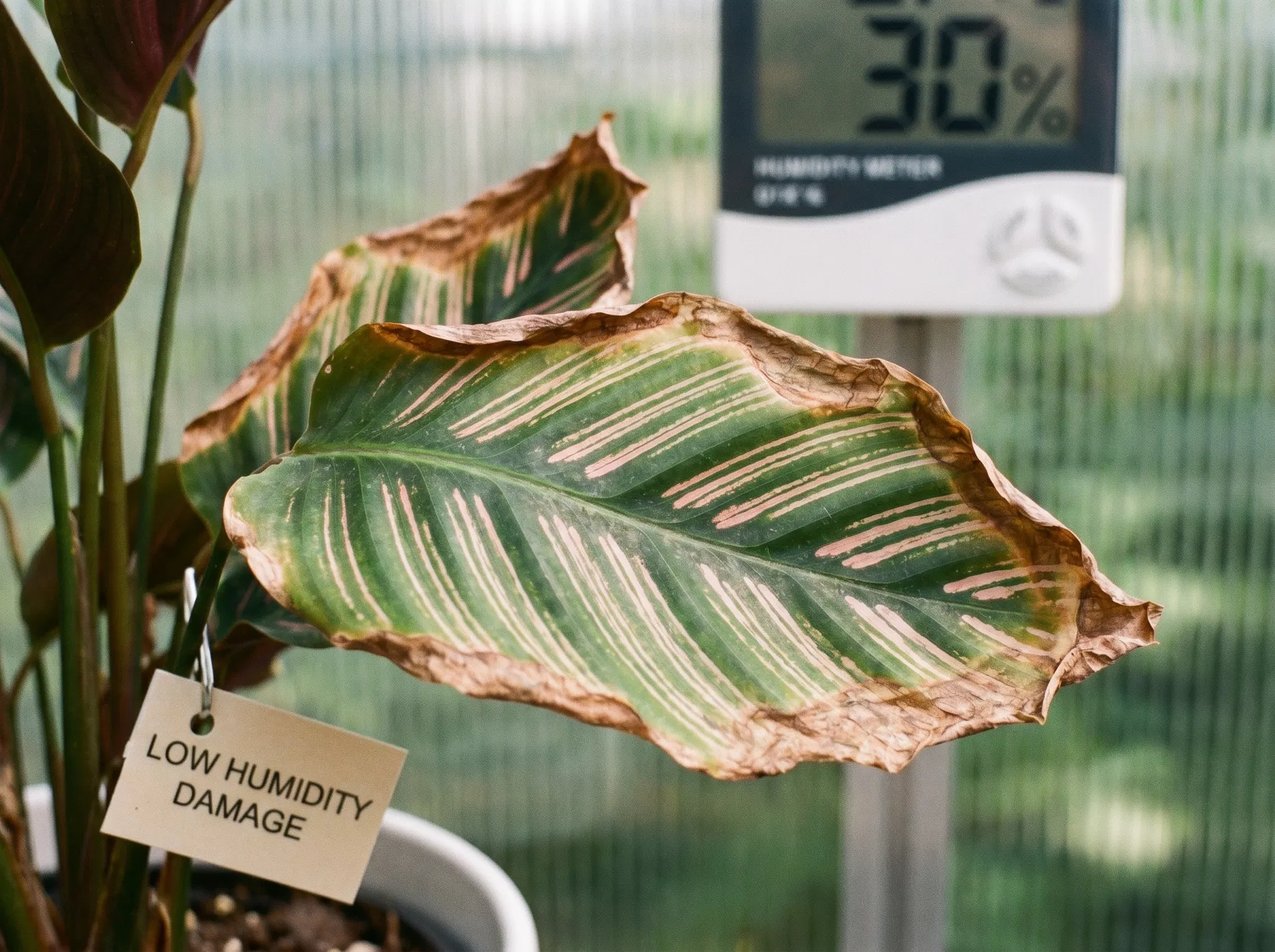
Low Humidity & Dry Air
Indoor heating and air conditioning strip moisture from the air. Tropical houseplants suffer immediately — leaf edges turn brown and crispy, leaves curl inward, and growth stalls. Calatheas, ferns, and orchids are especially vulnerable to humidity below 40%.

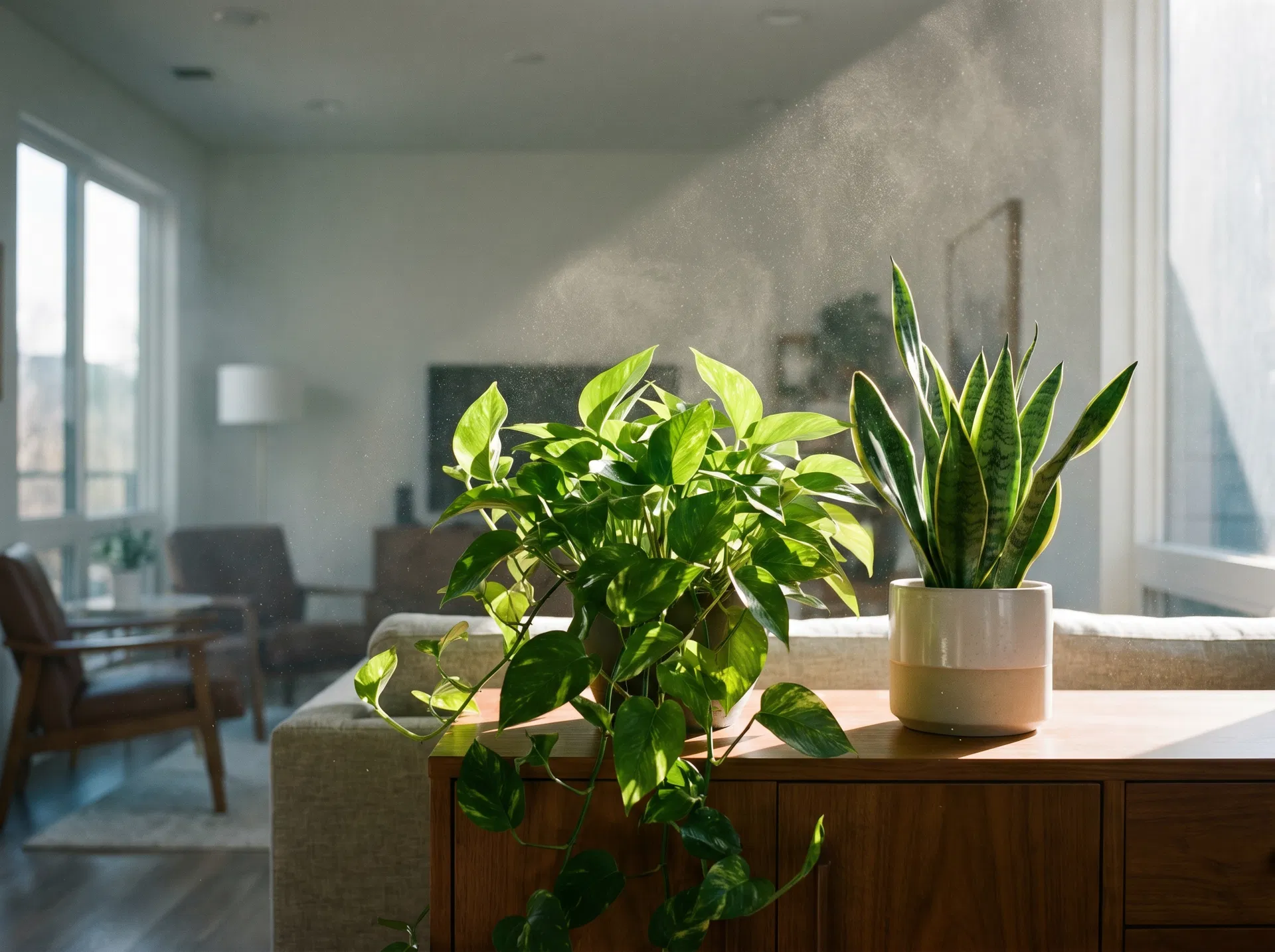
Indoor Air Pollutants
VOCs from cleaning products, paints, and synthetic materials accumulate indoors. While plants absorb some pollutants, high concentrations of ethylene gas (from fruit), cigarette smoke, or chemical sprays can damage sensitive foliage and inhibit growth.

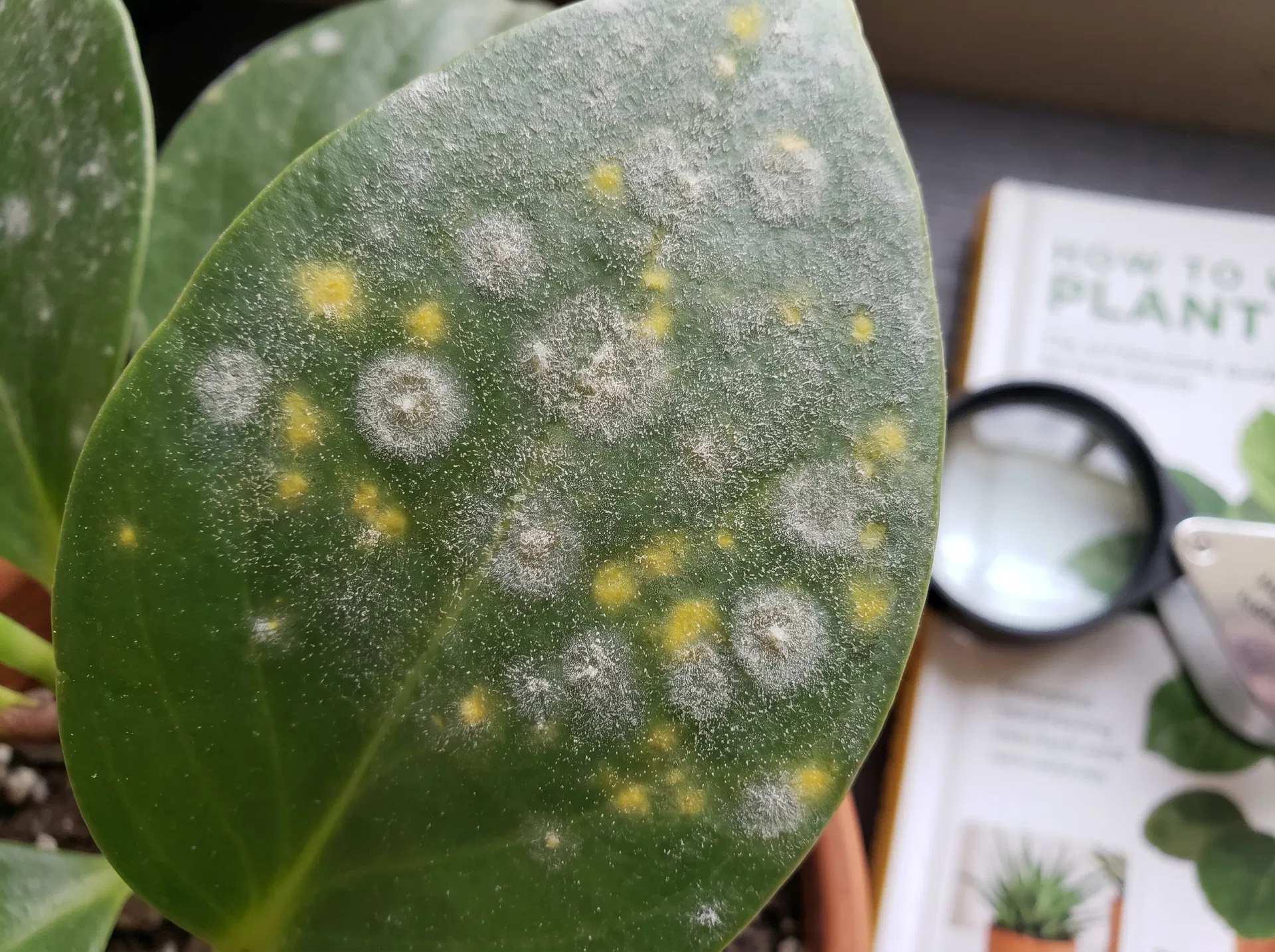
Fungal & Bacterial Disease
Powdery mildew, leaf spot, and botrytis (gray mold) thrive in humid, poorly ventilated indoor spaces. They spread through water splash, infected soil, and contaminated tools. Quarantine new plants for 2 weeks before introducing them to your collection.
SYMPTOM CHECKER
Something looks wrong with your plant? Select a symptom below and we'll walk you through the diagnosis, cause, and treatment.
Benefits to Humans
The relationship between humans and indoor plants is ancient and profound. Beyond aesthetics, houseplants provide measurable improvements to mental health, physical recovery, air quality, and everyday comfort inside your home. Tap or hover any highlighted statistic to see its source.

Air Purification
NASA research found that houseplants remove up to 87% of volatile organic compounds (VOCs) — including benzene, formaldehyde, and trichloroethylene — from indoor air within 24 hours. Peace lilies, spider plants, and snake plants are top performers.
Mental Health
Studies show that interacting with indoor plants reduces physiological and psychological stress. Caring for plants lowers cortisol levels, reduces anxiety by up to 37%, and has been used therapeutically for depression and PTSD recovery.
Physical Health
Hospital patients with plants in their rooms recover faster, require less pain medication, and have lower blood pressure. Exposure to indoor greenery reduces cardiovascular stress and promotes measurable physiological calm.
Humidity & Comfort
Plants release moisture through transpiration, raising indoor humidity by 10–15%. This reduces dry skin, irritated eyes, and respiratory discomfort — especially in winter when heating systems strip moisture from the air.
Plant Care Guide
Mastering the fundamentals of indoor plant care — water, light, humidity, soil, propagation, and rotation — transforms struggling plants into thriving ones. Each topic below is grounded in plant biology and practical experience.
How to Water Correctly
Finger Test: Insert your finger 1–2 inches into soil. Water only when it feels dry at that depth. This is the most reliable method for most houseplants.
Bottom Watering: Place the pot in a tray of water for 15–20 minutes. The soil absorbs moisture from below, keeping the topsoil dry and discouraging fungus gnats.
Water Quality: Use room-temperature, filtered, or rainwater. Fluoride and chlorine in tap water can cause brown leaf tips, especially on Calatheas and spider plants.
Drainage is Non-Negotiable: Always use pots with drainage holes. Standing water in saucers invites root rot. Empty saucers 30 minutes after watering.
Seasonal Adjustments
Spring & Summer (Active Growth): Water more frequently as plants are actively growing and transpiring. Check soil every 3–5 days.
Fall & Winter (Dormancy): Reduce watering frequency by 30–50%. Growth slows dramatically and roots absorb far less water. Overwatering in winter is the most common mistake.
Pot Material Matters: Terracotta pots dry out faster than plastic or glazed ceramic — adjust your watering schedule accordingly.
Pot Size: Plants in oversized pots hold excess moisture around roots. Always choose a pot only 1–2 inches larger than the root ball.
Succulents & Cacti
Every 2–4 weeks
Allow soil to dry completely. Less is always more.
Tropical Foliage
Every 7–14 days
Water when top inch is dry. Consistent moisture, never soggy.
Ferns & Calatheas
Every 5–7 days
Keep soil evenly moist. Never let them dry out completely.
What People Are Saying
Voices of the Green World
"Superb plant connoisseur."
Jane Fonda
"Great advice — here's some cigarettes."
Michael J. Fox
"These plants are killer."
Michael Landon
"Call it pioneering, but caring for plants is the most natural thing."
Russell Simmons
Doc Green Thumb
You will love how living plants transform a home or an office. Now that you know how to care for them — let us bring the green world to you.
Free Consultation — No Obligation
Ready to Bring Plants Into Your Space?
Our experts will assess your space, recommend the perfect plants, and handle installation and ongoing care — so you get all the benefits without the guesswork.
GET A FREE CONSULTATIONWhat We Offer
Interior Plant Installation
Up to $500 installation value — plants selected and placed by our experts
Ongoing Plant Maintenance
Watering, rotation, soil checks, and pest monitoring — all handled for you at a reasonable price.
First Month of Maintenance — FREE
No obligation. We guarantee the health of every plant we install
Home & Office Installations
From single-room houseplants to full commercial lobby installations
30+ Years of Indoor Plant Expertise
Trusted by homes and businesses across the region for three decades
Contact Us
Have a question about plant care, or interested in Doc Green Thumb's professional services? Fill in the form below and we'll get back to you.